
For the community · The promise and the limits behind the seal
What the Halal Community Council seal really means
The seal is not a magic stamp that solves every question. It is a visible sign that a business has invited outside expectations, agreed to certain standards in writing, passed a check, and accepted that there is a process if things go wrong.
We prefer clear, modest claims over impressive promises. This page is here so you can understand what the seal is actually saying to you as a halal conscious customer, level by level, and what it is not saying.
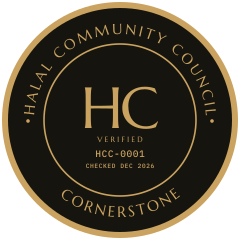 Cornerstone
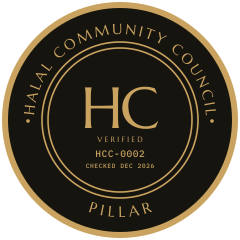 Pillar
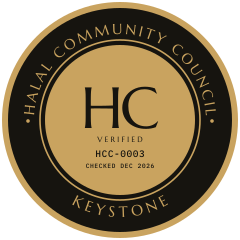 Keystone
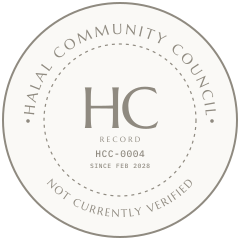 Not currently verified
Effort, not perfection · Clarity, respect, accountability
At a glance: what the seal is saying
When you see the seal, you are not seeing a claim that everyone agrees on every detail. You are seeing a commitment to honesty about what is being offered, a dated public record of what HCC checked, and a path for concerns to be heard.
When you see the seal, you are seeing a promise about how this business will speak to you, answer your questions, and respond if something goes wrong. You are also seeing a check: HCC looked at named things at this one location, to the depth its level describes, on the date shown. It is not a guarantee that every detail is perfect.
In simple terms
- Yes: clear communication about which items are offered as halal here, where they come from, and which are not.
- Yes: a basic level of respect for Muslims and halal conscious concerns.
- Yes: a way to raise serious concerns that will actually be heard.
- Yes: a public record that says what HCC checked, when, and what the check does not cover.
- No: a blanket religious ruling about everything on site for every opinion.
- No: a one-time trophy that can never be withdrawn.
- No: a seal anyone can buy. Businesses pay HCC an application fee and annual dues. Payment never changes the outcome of a check.
Level by level
What each level says, covers and does not cover
The seal comes in three levels. The level shows how deeply HCC checked. A higher level means more checking. Dues rise with the checking, and no level is granted without passing its checks. Each level makes a claim the level below does not. A check lasts 12 months, and every record spells out its own scope in plain words.
-
Cornerstone · one ring
The named items were checked on the date shown
HCC reads the supplier invoices and certificates for the items in scope, makes one visit in person or by live video walkthrough, and puts the five counter questions to staff. The record names which halal source the items rest on: a certifier's certificate or a supplier's plant statement.
It covers
- The meat and poultry in the named items, at this location, on the date shown.
- Every place the business says "halal", reviewed on the visit.
It does not cover
- Other items on the menu.
- Sauces, marinades, desserts and other ingredients in the named items, unless the record lists them.
- Separation seen in person, when the visit was by video.
-
Pillar · two rings
Every item it calls halal was traced, and separation was checked in person
Everything in Cornerstone, plus every item the location calls halal with meat, poultry, gelatin or animal fat traced to a source covered by a current halal certificate from an outside certifying body, including broths, bases and sauces. An inspector observes separation on site, and staff complete the HCC staff course.
It covers
- Every item the location calls halal on its full menu, as of the date shown.
- How those items are stored, prepared, cooked and kept apart, seen in person.
It does not cover
- Sealed packages sold as packed, which are listed with their own labels.
- Catering and events, unless the record lists them.
-
Keystone · gold center
HCC keeps checking all year, without warning
Everything in Pillar, plus two unannounced visits a year, an imam's review of the file, a monthly watch on every supplier certificate, and the owner's signed, sworn statement of every source.
It covers
- Everything in Pillar, kept under watch through the year.
- The dates of each unannounced visit, shown on the record.
It does not cover
- The same exclusions as Pillar.
- Every day of the year. Unannounced visits sample the year; they do not see all of it.
At every level
What every record says, and what no check covers
Whatever the level, the record behind the seal follows the same rules, so you can read any record the same way. No seal has been issued yet: HCC's board and standards committee are being formed, and no seal is decided until they are.
Every record shows
- The level, the date of the check, and the date it is good through. A seal never shows past that date.
- Who signed, by role only: a checker, a second reviewer who did not do the visit, and an imam where he took part.
- The halal source named by the business: its supplier or certifier.
- One sentence on what the check covers, and one on what it does not.
- Each fact with its basis and its date: Seen HCC examined a document. Observed HCC saw it on a visit. Stated The business told us, and we report it as their statement.
- Whether non-halal items are served there, stated plainly, for example "Non-halal items served: none observed".
No check covers
- Food safety. Cleanliness, temperatures, allergens and illness belong to the health department.
- Religious rulings. HCC follows qualified scholars and makes no rulings of its own.
- Every delivery after the check date, and every dish or shift.
- Other locations of the same business, unless each has its own record.
- Catering and off-site events, unless added to the scope. An event can have its own event record, which never carries a seal.
- Service, price, quality and taste.
Two cases worth knowing
Places that also serve non-halal items, and items marked "Referred"
A location that also serves pork or other non-halal items can reach any level, but only when separation is complete and an HCC inspector sees it in person: its own storage, prep space, cooking surfaces, frying oil, utensils and labels. Every item it calls halal must be in scope and traced as the level requires, and every non-halal item must be clearly labeled as non-halal where you order. Video is never enough for this, at any level. The record states the facts plainly, for example: "Non-halal items served: yes, pork. Separate storage, prep and frying observed." At Keystone, every unannounced visit checks the separation again. This rule applies for now. HCC will ask its Scholarly Advisor for his view once he is in place.
Some questions turn on Islamic dietary law, such as a doubtful ingredient or how shared equipment is cleaned. Those go to HCC's imam. Until he answers, the item is left out of the check and listed on the record as "Referred". The check of everything else goes ahead.
Three ideas
Clarity, respect and accountability behind the seal
Every place that carries the seal is different. Some are restaurants. Some are markets. Some are butchers, bakeries or caterers. The seal does not make them all the same. It does, however, mean that they have agreed to move under three shared ideas, and that they were checked against one written Standard.
-
1
Clarity
Businesses that carry the seal are expected to speak honestly about what they offer. That includes being clear about which items they offer as halal and where those come from, which items are not halal, and where there are limits or mixed opinions. Every halal claim names its source.
The goal is to reduce confusion and hidden surprises. You should not have to guess what basic words on the menu or in their marketing actually mean.
-
2
Respect
We expect a basic level of respect in attitude and communication toward Muslims and halal conscious concerns. That includes how staff speak, how questions are answered, and how feedback is received. "I'm not sure, let me check" is a good answer.
Even when there is disagreement, you should not be mocked, dismissed, or made to feel unwelcome for caring about halal.
-
3
Accountability
If serious concerns arise, there is a process. We are able to contact the business, ask questions, check again, and when needed, withdraw the seal after notice and a chance to appeal. The seal can be lost if trust is broken.
The point is not to punish businesses for every mistake. It is to make sure there is somewhere to turn when patterns of harm or confusion appear.
In writing
What a business agrees to when it carries the seal
When a business passes a check and carries the Halal Community Council seal, it is not just placing a pretty symbol on the door. It is making specific promises, in a signed agreement, about how it will show up for halal conscious customers.
- To answer honest questions about its products and services without being defensive or dismissive.
- To avoid misleading words about being halal or Muslim friendly when that is not accurate, and to name its real halal source wherever it says "halal".
- To adjust confusing language on menus, signs, and websites when it is pointed out in good faith, within 14 days.
- To welcome private feedback from the community and take it seriously, even if it cannot change everything at once.
- To keep us informed within 14 days when there are major changes that affect halal conscious guests, such as new suppliers, menu shifts, or a new owner.
- To let HCC check: documents on request, visits, and at Keystone, visits without warning.
- To accept that keeping the seal depends on continuing to honor these expectations in practice, not only on paper.
You may never see all of this directly, but it is the backbone behind that small seal. It is why we treat the seal as something that can be withdrawn if needed, not a permanent trophy.
The limits
What the seal does not guarantee
To protect you and protect the honesty of the seal, we need to be very clear about what it does not promise. These limits are not fine print. They are part of respecting the diversity of opinion inside the Muslim community.
Different families follow different standards. We do not claim to flatten those differences. Instead, we focus on honesty, clarity, dated facts and a path for accountability, so that you are not starting from zero every time.
- It does not guarantee that every item, ingredient, or business practice fits every school of thought. HCC never says food "is halal" in its own voice. It says what it checked.
- It does not guarantee that you will never experience poor service, a bad day, or a frustrating interaction.
- It does not replace formal halal certification in places where that is normally expected or required. The seal is not a halal certification, and it never uses that word.
- It does not mean that every scholar or every Muslim will agree that this business is suitable for every situation.
- It does not remove your responsibility to ask questions, read signs, and walk away if something feels clearly wrong to you.
- It is not a food safety rating, and it is not for sale. Fees pay for the checking. They never decide the result.
When things go wrong
How we respond
No system can remove all mistakes. What matters is what happens next. If you share a serious concern about a place that carries the seal, there is a simple process that guides how we respond.
We do not promise to handle every situation exactly as any one person might want. We do promise not to ignore repeated or serious concerns that affect the community.
Concerns are never published. A credible report of illness or a health hazard is passed to the local health department, because HCC does not judge food safety.
-
We receive your report
You tell us what happened, where, and when, in your own words. You can choose how much of your information you want us to share, if any, when we speak to the business. Without your permission, we never name you to the business.
-
We look for patterns and context
We may ask follow up questions and, when relevant, look at other reports about the same business and at its record. We are especially attentive when multiple people describe similar concerns.
-
We speak directly with the business
We reach out privately to the business to understand its side, share what we can about the concern, and discuss what would need to change or be clarified. We may check again, including a visit without warning.
-
We may withdraw the seal
If we believe trust has been broken in a serious way and cannot be restored quickly, we may withdraw the seal. That happens only after written notice, a chance to fix the problem, and a chance to appeal to people who did not decide. In other cases, we may monitor, warn, or offer guidance first. When there is credible evidence of pork or an untraced source in an item offered as halal, we ask the business to stop offering that item as halal within 24 hours while we review.
In everyday life
How to use the seal alongside your own judgment
The seal is not meant to replace your own thinking or the guidance of people you trust. It works best when you treat it as one piece of information among many.
- Use it to narrow down options in a new area or when you are tired of starting from scratch.
- Use it as a reason to feel more comfortable asking questions, since places with the seal have agreed to be open about what they offer.
- Use it as a small sign of goodwill, not as a final religious answer on complicated questions.
- Read the record behind it: scan the QR code or look it up, and see what was checked, when, and what was not.
- Set it beside what you already know, what you see with your own eyes, and what your teachers advise.
In other words, let the seal lighten the load a little, not carry all of it.
Questions
Common questions about the seal
Does the seal mean everything at this business is fully halal for me?
No. The seal means the business has agreed to clarity, respect, and accountability around halal conscious concerns, and that HCC checked the named things at its level on the date shown. It does not guarantee that every menu item or practice fits every opinion. Read the record to see exactly what the check covers. You can still choose what feels correct for your level of practice.
Is Halal Community Council a religious authority or certification body?
No. We do not issue fatwas, rule on ingredients, or replace local scholars. We focus on what we can check, and on communication, expectations, and follow up. Once HCC's Scholarly Advisor, an imam, is in place, he joins checks whenever possible and reviews every Keystone file, but he advises; he does not grant or withdraw seals. In some cases, businesses also hold a formal halal certification from an outside certifier. That is a separate process, and when it applies, the record names the certifier as the business's source.
Can a business lose the seal once they have it?
Yes. The seal is not permanent. Every check lasts 12 months and must be renewed with a fresh check. If we see patterns of dishonesty, clear disrespect, or serious harm that is not corrected, we may withdraw the seal after notice and a chance to appeal. The live seal then turns gray on every website at once. This is part of why the seal matters.
Does a higher level mean a better business?
No. The level says how deeply HCC checked, never how good the food is or how much the business paid. A business can buy more scrutiny, never a better grade. The Register never ranks places.
What if I see the seal and the Register says something different?
Tell us. A seal on a door, menu, website or social media page should match a current record. A seal at another location, an expired seal, a higher level than the record shows, or a seal with the word "certified" added (a word HCC never uses for its seal) are all misuse. Share a concern and choose "The HCC seal shown where it should not be".
Your next step
Ready to see where the seal shows up
Now that you know what the seal means and what it does not, you can start using it as one more tool when you choose where to eat, shop, and spend, as the first places pass their checks. We grow slowly on purpose so that the seal stays meaningful.