
The HCC Standard, Version 1
How we decide who may carry the seal
Carrying the HCC seal is not a quick checkbox or a paid logo. It is an agreement to clear expectations, ongoing accountability, and a standard of conduct toward halal conscious customers.
Version 1. Published October 15, 2026. It applies to every check decided on or after that date.
This page is the published Standard behind the Register and the HCC Verified seal. It explains what we look for, what HCC checks at each level, what counts as evidence, how a check is reviewed and decided, how a seal is kept, and what can cause a seal to come off. Our goal is simple. The seal should still mean something years from now, even when it appears in more cities and more shop windows.
The rule behind everything in this Standard fits in two words: we checked. HCC says what it checked, how, and when. It never says, in its own voice, that food is halal.
The Standard at a glance
Every place is checked against four pillars, at one of three levels. Each level makes a claim the level below does not. A business can buy more scrutiny, never a better grade.
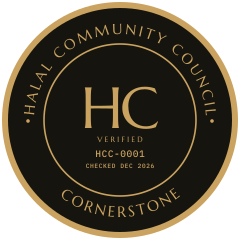 Cornerstone
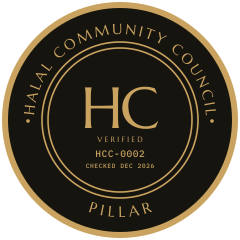 Pillar
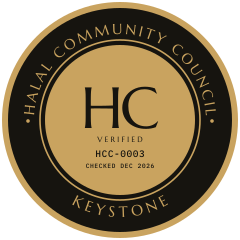 Keystone
- Cornerstone tells a customer
- The named items were checked on the date shown.
- Pillar tells a customer
- Every item it calls halal was traced, and the kitchen's separation was checked in person.
- Keystone tells a customer
- HCC keeps checking all year, without warning.
Seals shown are samples with a sample record number. Section 3 sets out exactly what each level checks; section 10.3 says what a real seal shows.
The four pillars apply at every level:
- Communication and representation: how a business talks about its food, services and approach to halal.
- Halal conscious operations: how it buys, prepares, stores and presents what it offers.
- Conduct toward customers and staff: respect for the people who ask, and no retaliation.
- Responsiveness and follow up: what happens when a problem is identified.
How a check is reviewed and decided
Businesses do not become members, or carry the seal, simply by paying a fee. Each application goes through a steady process that leaves room for questions, clarification, and sometimes a clear decision that it is not the right fit. Fees pay for the checking. They never decide the result.
-
Application and initial information
A business applies with clear information about what it offers, where it operates, the items it offers as halal, and how it currently communicates to halal conscious customers. We may request links, photos, or documents to understand how the business presents itself in daily life.
-
The check, and clarifying questions
A checker reads the invoices and certificates against the four pillars, visits, and puts the five counter questions to staff. We ask follow up questions where information is missing or unclear, such as how certain items are sourced, prepared, or described to customers. Honest, detailed answers matter as much as the application itself. A second reviewer who did not do the visit signs the file.
-
Decision, or not yet
The standards committee decides: a pass at the level applied for, a pass at a lower level, not yet, or decline. A business told "not yet" gets a written list of every line that did not pass and what would pass it. A business that is declined or told "not yet" is welcome to improve and apply again.
-
Ongoing assessment
A seal is not permanent by default. It lasts 12 months and is renewed only with a fresh check. We pay attention to patterns in community feedback and to significant changes in how a business operates or describes itself, which it must report within 14 days. Serious concerns can trigger a closer look, a request for changes, or notice that the seal may be withdrawn.
1. Purpose
1.1 Why HCC exists
Halal Community Council grew out of years of small conversations where Muslims, converts and families described the same weight. Too many unknowns. Too many mixed signals. No clear place to turn when something felt wrong.
In many cities the pattern is the same. One family finds a restaurant it is comfortable with, another avoids it, and a third hears mixed reviews and feels stuck. Some places use halal language lightly. Others are careful but do not know how to explain what they do. Concerns spread quietly in group chats with no path to resolution. At the same time, there are owners who care and feel alone. They want to do better for halal conscious customers, and they have no structured place to ask, improve, or show that they are serious about being held to a standard.
HCC stands in that gap. It does not replace scholars, certifiers or local leaders. It adds a visible, published standard where community life and business life meet, and it keeps a public record of what it actually checked.
HCC is not a marketing agency that sells quick logos. It measures success by trust over time, not by how many seals appear in a single year. It grows slowly on purpose, so that each place can be looked at as more than a name on a list, and it explains the seal in plain language rather than slogans.
1.2 What HCC publishes
- The Register. Dated facts about each place HCC checks. Every fact carries its basis: Seen (HCC examined a document), Observed (HCC saw it on a visit), or Stated (the business told HCC, and HCC reports it as the business's statement). Every record says what the check covers and what it does not. The Register has no ratings, no scores and no rankings. It is free to read.
- The HCC Verified seal, in three levels: Cornerstone, Pillar and Keystone. The level shows how deeply HCC checked. A higher level means more checking. Dues rise with the checking, and no level is granted without passing its checks. A check lasts 12 months.
1.3 What the seal is
When a business carries the HCC seal, it has agreed to more than a graphic on its door or website. The seal is:
- A dated statement that HCC checked named things at one named location, to the depth its level describes, on the date shown.
- A sign that the business invited outside expectations, accepted this Standard in writing, and agreed to be reachable when concerns arise.
- A sign that the business names its real halal source (its supplier or certifier) and that HCC saw the documents behind that claim.
- A seal that can come off. A seal that never comes down cannot be trusted.
In short, the seal stands for clarity about what is offered, respect toward the people who ask, and accountability when something goes wrong.
1.4 What the seal is not
- Not a halal certification. HCC is not a halal certification authority. It does not say that food is halal. It says only that HCC checked the named facts at the stated level. The seal never uses the word "certified".
- Not a religious ruling. HCC is not a fatwa council. HCC follows qualified scholars and makes no rulings of its own. The seal does not mean that every item fits every school of thought or every family's practice.
- Not a promise about everything. The seal covers what its record says it covers, on the dates shown. It does not promise that every item, delivery or interaction is free of error.
- Not a food safety rating. That is the health department's work.
- Not for sale. No business gets the seal by paying a fee. Fees pay for the checking. They never decide the result.
- Not permanent. It lasts 12 months, must be renewed with a fresh check, and can be withdrawn after notice and appeal.
- Not a replacement for your own judgment. Your scholars and your conscience come first. Nor does the seal replace detailed certification where that is required. The seal does not give anyone permission to pressure others to eat or shop where they are not comfortable.
HCC never describes the seal as a guarantee. Our commitment is to keep the seal honest about what it can promise, and to make sure this Standard supports that honesty.
1.5 The principles behind every decision
These come from HCC's founding principles. If a decision cannot be explained through them, HCC is not finished with it.
- Clarity before claims. Clear, honest descriptions of what a business actually does matter more than ambitious labels. Vague or exaggerated language is a serious problem, even when the practice behind it is good.
- Respect in every direction. Toward the community that relies on the seal, toward businesses that invite scrutiny, and toward the scholars whose work informs the Standard. No contempt or mockery in any direction.
- Accountability with a path to repair. When concerns arise, HCC listens, asks and looks for patterns. A business that needs to correct something gets the chance. Patterns of harm or dishonesty end in withdrawal.
- Modesty in what we promise. HCC says what it can support and leaves room for each person's conscience and knowledge.
- Community voice in the room. Concerns from converts, long-time residents, families and people often overlooked are a core input, not an afterthought.
- Consistency over convenience. The same Standard and the same tone across neighborhoods, income levels and marketing budgets. Popular places are not treated more gently than unpopular ones.
2. The Four Pillars
Every application is reviewed through four main lenses. They guide the first decision and every assessment after it. Below, each pillar keeps its original meaning and is then broken into numbered requirements that a checker can test. The checklists cite these numbers.
A note on words: the Four Pillars are the four areas every business is held to, at every level. "Pillar" is also the name of the second level. Where this Standard means the level, it says "the Pillar level".
Carrying the seal means, in plain terms:
- The business is willing to be clear and honest about what it offers to halal conscious customers.
- The business accepts that questions and concerns will be taken seriously, not brushed aside.
- The business understands that patterns of misrepresentation or harm can lead to withdrawal.
- The business is prepared to adjust communication or practices when significant issues are identified.
- The business is comfortable being part of a network where expectations are written down.
Carrying the seal is not a certificate of perfection. It is a visible sign of intent, effort, and accountability in an area where many people feel they are walking alone.
2.1 Communication and Representation (CR)
HCC looks closely at how a business talks about its food, services and approach to halal: menus, websites, delivery apps, signage, and how questions are answered on the spot. Vague, exaggerated or contradictory claims are a serious concern, even when intentions are good.
| No. | Requirement, and how it is tested | Levels |
|---|---|---|
| CR-1 | Every halal claim names its source. Wherever the business says "halal" (menu, sign, window, website, delivery app, social media, staff answer), it names the supplier or certifier it relies on, or points to where a customer can see that name (a posted certificate, a posted statement, or the HCC record). How it is tested: Wording review of every place the business says "halal". | All |
| CR-2 | No claim is broader than the evidence. The business does not call an item halal, or use words such as "zabiha", "hand slaughtered", "fully halal" or "100% halal", unless the file supports that exact claim. "Zabiha" or "hand slaughtered" needs a certificate or plant statement that says so. How it is tested: Each claim compared with the Seen documents. | All |
| CR-3 | Every item the business calls halal is inside the check. While it carries the seal, the business does not call any item halal at this location unless that item is in the scope of its record. How it is tested: Menu and signage compared with the record's scope. | All |
| CR-4 | Customers can tell which is which. Where the location also sells items that are not offered as halal, customers can tell them apart on the menu, display or label. How it is tested: Observed on the visit. State modules add exact sign wording. | All |
| CR-5 | What is written, said and done agree. The menu, the staff answers and the practice HCC observes tell the same story. How it is tested: The five counter questions and the visit, compared with the file. | All |
| CR-6 | The seal is shown only as allowed. Only at the checked location, only while verified, only in the forms HCC supplies, never altered, never with the word "certified", and never as "HCC halal" or "approved by HCC". How it is tested: Seal use observed on the visit and online. | All, after a pass |
2.2 Halal Conscious Operations (OP)
HCC does not control every detail of a business, but it expects to see thoughtfulness in how the business buys, prepares, stores and presents what it has to offer when it uses halal language. HCC pays special attention to areas where cross-contact, unclear sourcing or careless shortcuts are likely.
| No. | Requirement, and how it is tested | Levels |
|---|---|---|
| OP-1 | Buying from named sources. The meat and poultry in every item in scope comes from the sources the business named, proven by invoices. How it is tested: Seen invoices; Observed boxes and labels. | All |
| OP-2 | Inspected product only. All meat and poultry offered to the public carries a federal or state mark of inspection with an establishment number. Nothing marked "Not for Sale" and nothing without an inspection legend is offered to the public. How it is tested: Observed labels; Seen invoices. | All |
| OP-3 | No contact with pork or untraced meat. Items in scope do not share frying oil, a cooking surface or utensils with pork, or with meat or poultry from a source that is not traced, as far as the visit shows. How it is tested: Observed on the visit. | All |
| OP-4 | Every halal item is traced. Every item the location calls halal that contains meat, poultry, gelatin or animal fat traces to a certified source (see 5.6). Every other item at the location with those ingredients is clearly labeled as non-halal at the point of sale (see 3.5). How it is tested: Seen documents for every such ingredient; Observed storage and labels. | Pillar, Keystone |
| OP-5 | Separation observed in person. Items in scope are stored, prepared and cooked apart from anything that is not traced, and an HCC inspector saw this on site. Where the location also serves non-halal items, separation is complete (see 3.5). How it is tested: Observed in person. | Pillar, Keystone |
| OP-6 | Staff trained. Every person who takes orders, serves, or prepares items in scope has completed the HCC staff course, which HCC teaches on its course platform, HCC Academy. New staff complete it within 30 days of starting. How it is tested: Seen course records. | Pillar, Keystone |
| OP-7 | Paperwork kept. Invoices and certificates for items in scope are kept for at least two years, or longer where a state module requires it, and produced to HCC within 7 days of a request. How it is tested: Seen on request. | All |
| OP-8 | Continuing watch. Every supplier certificate is watched monthly, and the owner gives a signed, sworn statement of every source. How it is tested: Seen watch log and sworn statement. | Keystone |
2.3 Conduct Toward Customers and Staff (CT)
How people are treated matters. HCC considers whether staff are encouraged to answer questions respectfully, and whether feedback from halal conscious customers is welcomed or mocked. Patterns of hostility, mockery or retaliation toward people who raise concerns are not compatible with the seal.
| No. | Requirement, and how it is tested | Levels |
|---|---|---|
| CT-1 | Respectful answers. Staff answer halal questions without mockery, hostility or dismissal. How it is tested: The five counter questions; concern history. | All |
| CT-2 | "I don't know, let me check" is welcome. Staff are allowed and expected to say they are not sure and find out, rather than guess. How it is tested: The five counter questions. | All |
| CT-3 | No retaliation. The business does not punish, ban, threaten or publicly shame a customer or staff member for raising a sincere halal question or concern. How it is tested: Concerns and cases; staff answers. | All |
| CT-4 | No instruction to misstate. No staff member is told to say anything about halal that is not true. How it is tested: Staff answers; any credible report becomes a case. | All |
2.4 Responsiveness and Follow Up (RF)
No business is perfect. What matters is what happens when a problem is identified. HCC looks for a pattern of responding, learning and adjusting, not ignoring or dismissing. A business that never wants to hear about concerns should not carry a seal tied to trust.
| No. | Requirement, and how it is tested | Levels |
|---|---|---|
| RF-1 | A named contact. The business names a role (not necessarily a person's name in public) that receives halal concerns HCC forwards, and it answers an HCC case message within 10 business days. How it is tested: Agreement; case history. | All |
| RF-2 | Fixes wording. When HCC or a customer points out unclear or wrong halal wording in good faith, the business fixes it within 14 days or explains in writing why it is accurate. How it is tested: Case history; re-check. | All |
| RF-3 | Cooperates with checks. The business gives HCC access for visits, including unannounced visits at the Keystone level, and produces requested documents within 7 days. How it is tested: Visit log; desk log. | All |
| RF-4 | Reports changes within 14 days. A change of supplier, menu, ownership or location is reported to HCC within 14 days (see 8.4). How it is tested: Desk log; compared with what the next visit finds. | All |
3. The three levels
Each level makes a claim the level below does not. A business can buy more scrutiny, never a better grade. Every business can earn every level on the same published terms.
| Level | What HCC does | What the seal tells a customer | How the visit is done |
|---|---|---|---|
| Cornerstone | Reads supplier invoices and certificates for the items in scope. One visit. The five counter questions put to staff. | The named items were checked on the date shown. | In person or by live video walkthrough (in person where the location also serves non-halal items, 3.5) |
| Pillar | Everything in Cornerstone, plus every item the location calls halal with meat, poultry, gelatin or animal fat traced to a certified source, separation observed in person, and staff through the HCC staff course. | Every item it calls halal was traced, and the kitchen's separation was checked in person. | In person |
| Keystone | Everything in Pillar, plus two unannounced visits a year, an imam's review of the file, a monthly watch on every supplier certificate, and the owner's signed, sworn statement of every source. | HCC keeps checking all year, without warning. | In person, announced and unannounced |
All three levels apply all four pillars. The Four Pillars table above marks the few requirements that start at the Pillar or Keystone level. A location that also serves pork or other non-halal items can reach any level under the rules in 3.5.
3.1 Cornerstone
Requirements.
- The business states its scope: the items it offers as halal at this location. Under CR-3, every item it calls halal must be in scope.
- For each item in scope, HCC traces its meat and poultry through supplier invoices and certificates (Seen), with the meat and poultry evidence in 5.4. At Cornerstone the source may be a certified source or a plant statement (5.6), and the record names which one it rests on.
- One visit, in person or by live video walkthrough. The visit confirms that the invoiced product is what is in storage and in use, reviews every place the business says "halal", and records how items in scope are handled.
- The five counter questions are put to staff (section 4).
- Every Four Pillars requirement marked "All" is met, as far as it can be tested at this check, and every line of the state module for the location's state passes.
- If the location also serves pork or other non-halal items, it meets 3.5, and the visit is in person.
What a Cornerstone record covers. The meat and poultry in the named items, at this location, on the date shown. The scope line names the items.
What it does not cover. Other items on the menu. Sauces, marinades, desserts and other ingredients (such as gelatin, animal fat, broths and bases) in the named items, unless the record lists them. Separation seen in person, if the visit was by video. Catering, events and other locations, unless listed. Every delivery after the check date.
3.2 Pillar
Requirements. Everything in Cornerstone, and:
- Scope is every halal item at the location. The check covers every item the location prepares, cooks, cuts, packs or serves as halal. Every other item with meat, poultry, gelatin or animal fat is clearly labeled as non-halal at the point of sale (3.5). Where the location serves nothing that is not halal, the scope is the whole kitchen. Sealed retail packages sold unopened are outside it and are listed with their own labels.
- Every halal item traced (OP-4). The business lists every item it calls halal with its meat, poultry, gelatin and animal fat ingredients, including broths, bases, stocks, shortenings and sauces made in house or bought in. Every one of those ingredients traces to a certified source, with the evidence in 5.4 and 5.5.
- Separation observed in person (OP-5). An HCC inspector visits on site and sees how items are stored, prepared, cooked, held and cleaned.
- Staff trained through the HCC staff course (OP-6).
A location that also serves pork or other non-halal items can pass at the Pillar level when it meets 3.5.
What a Pillar record covers. Every item the location calls halal on the full menu at this location, as of the date shown, with separation observed in person. Where the location also serves non-halal items, the record says so in plain words (3.5).
What it does not cover. Sealed packages sold as packed (listed with their own labels). Catering and events, unless listed. Other locations. Every delivery after the check date.
3.3 Keystone
Requirements. Everything in Pillar, and:
- Two unannounced visits a year. Within each 12-month period, two visits in person without notice, during opening hours, at least three months apart, at least one during a busy service. Each repeats the storage walk, the separation check and the counter questions. At a location that also serves non-halal items, each visit rechecks the separation and labeling in 3.5. On these visits the inspector may first put the five counter questions as an ordinary customer, before introducing themselves. Nothing is recorded during those questions, and the inspector writes notes straight after. Recording starts only after the announcement. The business agrees to this in its application and tells its staff (section 4).
- An imam's review of the file. The imam reviews the whole file before the first decision, at each renewal, and after any reported change of source. He writes a private note to the file. A religious question he raises is answered in the file before the file moves on, or, until it is answered, the item it touches is left out of scope and listed on the record as "Referred" (5.5, 7.1).
- A monthly watch on every supplier certificate (OP-8). HCC checks each certificate's expiry date and, where the certifier publishes one, its public list. A certificate due to expire within 30 days triggers a request for the new one.
- The owner's signed, sworn statement of every source. It lists every supplier, product, certifier and establishment number for every meat, poultry, gelatin and animal fat ingredient in an item in scope, states that no other source is used for those items, and is renewed each year and updated within 14 days of any change.
What a Keystone record covers. Everything in Pillar, kept under watch through the year, with the dates of each unannounced visit shown.
What it does not cover. The same exclusions as Pillar. Unannounced visits sample the year; they do not see every day.
3.4 Levels show depth, never price
- The level on the seal is set only by how deeply HCC checked.
- Membership benefits, services bought, perks redeemed and dues paid never appear on or near the seal.
- The Register never ranks places. No directory that licenses HCC's status may order listings by level by default, or by what a business pays. A user may choose an HCC filter or sort, as the Status Feed License allows.
3.5 Locations that also serve non-halal items
A location that also serves pork or other non-halal items can reach any level. It passes only when all of these hold:
- Separation is complete and observed in person. An HCC inspector sees on site that items in scope have their own storage, prep space, cooking surfaces, frying oil and utensils, and that labels keep halal and non-halal items apart. Video is not enough for this at any level, so a Cornerstone visit to such a location is in person.
- Every item it calls halal is in scope (CR-3) and traced to its source as the level requires: through invoices and a certificate or plant statement at Cornerstone (3.1, 5.6), and to a certified source at Pillar and Keystone (OP-4, 5.6).
- Non-halal items are clearly labeled as non-halal at the point of sale: on the menu, menu boards, displays, package labels and delivery apps (CR-4). State modules add exact sign wording.
- The record states the facts plainly. For example: "Non-halal items served: yes, pork. Separate storage, prep and frying observed." Every record carries this fact. A location that serves none reads "Non-halal items served: none observed."
- Keystone's unannounced visits recheck separation on every visit (3.3).
Where an item in scope shares equipment with pork or untraced meat and the business relies on cleaning between uses, separation is not complete for that item. It is handled as Checklists line C-17 sets out: until the imam answers, the item is left out of scope and listed on the record as "Referred".
Starting to serve pork or other non-halal items is a menu change the business reports within 14 days (8.4). HCC then checks the separation in person.
This rule applies for now. HCC will ask its Scholarly Advisor for his view once he is in place, and any change will follow section 14.
4. The five counter questions
At every level, the checker puts these five questions to staff who serve customers. They test whether what a customer hears at the counter matches the file. They are asked in plain words, the way a customer would ask.
- "Which items here are halal?"
- "Where does your meat and chicken come from, and who certifies it?"
- "Is the halal meat cooked separately? Does it share a grill, fryer, oil or utensils with anything that is not halal?"
- "Is there any pork, alcohol, gelatin or animal fat in the halal items, including sauces and desserts?"
- "If I want to check for myself, can I see your certificate, and who can I ask if you are not sure?"
For a market or butcher, questions 1 and 3 become: "Which meat and poultry here is halal?" and "Is the halal meat cut, ground and stored apart from anything that is not halal?"
Who is asked. At least two people who take orders or serve customers, at least one of whom is not the owner. If only one person is on duty, that person. At the Pillar and Keystone levels, at least one of them works in the kitchen or at the meat counter.
Keystone unannounced visits. On these visits only, the inspector may first ask the questions as an ordinary customer, before introducing themselves. Nothing is recorded, and the inspector writes notes straight after. The inspector then introduces themselves and the visit continues as usual. Recording starts only after the announcement. The business agrees to this in its application and tells its staff that, at Keystone, an inspector may first ask questions as a customer before introducing themselves, and that nothing is recorded.
How answers are judged.
- A pass answer matches the file and what the checker observed, or is an honest "I'm not sure, let me check" followed by the right answer from a manager or a posted document.
- A fail answer is a confident answer that is wrong (for example, "everything is halal" when items are outside scope, a supplier who is not in the file, or "separate fryer" when the fryer is shared), or an answer given with mockery, hostility or dismissal.
- A fail answer is a "not yet" item, not a reason to decline. The business can train its staff, and HCC asks again by video before the decision.
HCC writes down what was said, not who said it. Staff are never named in the record.
5. Evidence
5.1 The three bases
Every fact in a record carries one basis and a date.
| Basis | Meaning | How the record shows it |
|---|---|---|
| Seen | HCC examined the document itself: the original, or a copy the business uploaded and HCC checked. | "Seen invoices, Sep and Oct 2026." "Seen certificate, valid through Mar 2027." |
| Observed | An HCC inspector saw it during a visit. The record says whether the visit was on site or by live video. | "Observed on site, Dec 2, 2026." "Observed on video walkthrough, Dec 2, 2026." |
| Stated | The business told HCC. HCC reports it as the business's statement, not as HCC's finding. | "Stated by the owner." "Stated by the owner; none observed." |
5.2 Rules for using the bases
- Sourcing needs Seen evidence. A Stated fact never proves where meat, poultry, gelatin or animal fat comes from. The Keystone sworn statement is a Stated fact made under oath. It is always paired with Seen documents and never replaces them.
- Seen and Observed outweigh Stated. When they conflict, the conflict is itself a finding under CR-5.
- An Observed fact describes only what was seen that day. It is never written as a permanent truth.
- Every fact has a date. Facts from an earlier check are shown as history, never as current.
- Absence is stated carefully. HCC writes "none observed" for what it looked for and did not see. It never writes "none" on its own authority unless a document proves it.
- Corrections are fast and dated. A fact shown to be wrong is corrected right away, and the record shows "Corrected date".
5.3 Evidence types
- Supplier invoices, bills of lading and delivery receipts.
- Halal certificates issued by a certifying body, with their product or plant scope and validity dates.
- Slaughter plant halal statements naming the supervising body or person and the slaughter method.
- Marks of inspection and establishment numbers on boxes and labels.
- Labels on exempt poultry naming the clerical official (see 5.4).
- Product labels, specification sheets and manufacturer letters for gelatin, animal fat and bought-in ingredients.
- Menus, signs, window displays, website pages and delivery app listings.
- Photographs and announced recordings from visits.
- Staff answers to the five counter questions.
- HCC staff course completion records.
- The owner's sworn statement (Keystone).
- State filings and posted statements required by a state module.
- Confirmation from a certifier: its public list, or a written reply to HCC.
5.4 Meat and poultry evidence
For every meat or poultry product in scope, the file holds:
- The establishment number. The federal (USDA) or state establishment number from the mark of inspection on the box or label.
- Invoices that tie the purchases to that establishment. Invoices or bills of lading showing that this location bought the product, and that the product came from that establishment. Where the business buys through a distributor, the distributor's invoice and the box label together must reach back to the plant.
- The slaughter plant's halal statement. A certificate or statement covering the plant that names the supervising body or person and the slaughter method.
- For exempt poultry, where poultry is slaughtered and sold under the religious exemption in 9 CFR 381.11, the approved label that names the clerical official under whose supervision the poultry was slaughtered.
Four further rules:
- Automatic fail. Any meat or poultry offered to the public that is marked "Not for Sale" (custom-exempt) or carries no inspection legend.
- State-inspected product. State-inspected product is generally limited to sale within that state. The second reviewer checks any state-inspected product that came from another state.
- Cutting and grinding in the store. Where the business cuts or grinds at retail, the file shows the source product was inspected and passed.
- Numbers on the record and re-checked. Establishment numbers are recorded on the Register entry and checked against the federal establishment directory at each renewal.
5.5 Gelatin and animal fat evidence
At the Pillar and Keystone levels, every ingredient containing gelatin or animal fat (including lard, tallow, animal shortening, fish gelatin, and broths, stocks and bases made from meat or bones) in an item in scope traces to a certified source (5.6), shown by one of:
- a certificate naming the certifier that covers the product; or
- a label on the product naming its certifier, photographed on the visit.
A manufacturer's statement is not enough for gelatin or animal fat at these levels, because the published Pillar promise is a certified source.
An ingredient that a manufacturer's dated written statement shows contains no animal-derived fat at all (for example, a vegetable shortening) is not an animal fat ingredient. It is recorded as Seen, with the statement, and listed by name on the record so customers can decide.
Waiting on the imam. How HCC treats plant, mineral and fish gelatin and animal fat is a question for the imam. Until he answers, an item with plant, mineral or fish gelatin, or with animal fat, that does not trace to a certified source is left out of the check's scope. The record lists it as "Referred". The check goes ahead for everything else. The same rule covers the two other questions waiting on him: alcohol as an added ingredient (Checklists, C-18), and the cleaning of shared equipment (Checklists, C-17).
5.6 Certified sources and named sources
- A certified source is a slaughter plant, processor or manufacturer covered for the product in question by a current halal certificate issued by a certifying body.
- A plant statement is a slaughter plant's own signed halal statement naming the supervising body or person and the slaughter method, with no certificate from a certifying body. It is not a certified source.
- The record says which. For each source, the record names whether it rests on a certificate ("Seen: certificate from" and the certifier's name) or a plant statement ("Seen: plant statement naming" and the supervising body or person).
- Which counts at each level. At Cornerstone, either may be used. At the Pillar and Keystone levels, every meat, poultry, gelatin and animal fat ingredient in an item in scope needs a certified source as in item 1, because those levels publish "traced to a certified source". A plant statement counts at Cornerstone only.
- HCC confirms the certificate is real and current. It checks the certifier's public list where one exists, or asks the certifier in writing.
- HCC does not rank certifiers. The record names the certifier the business relies on, so each customer can decide whether that certifier's approach suits them. Facts about method that a certificate states (for example, hand slaughter or machine slaughter, stunned or not stunned) are recorded as Seen.
- When the imam raises a concern about a certifier, for example that it is not a functioning body, the items that rest on that certifier are left out of the check's scope and listed on the record as "Referred" until the concern is resolved. The check goes ahead for everything else (7.1).
5.7 What never counts as evidence
- A certificate for a different plant, product or company than the one invoiced.
- An expired certificate, or one that cannot be confirmed.
- A photo of a certificate from the internet, or a screenshot with no source.
- A spoken assurance about sourcing, from anyone.
- A document that has been altered. Submitting one is grounds to decline or withdraw (see 7.2 and 9.1).
6. Scope vocabulary
A record uses fixed words so that it says exactly what was checked and nothing more.
6.1 The parts of a record
- Record number (for example, HCC-0002), place name, kind of business and address. One record covers one location.
- Level, Checked (the date of the decision) and Good through (12 months later, or for an early renewal, as 8.1 sets).
- Signed by, in roles only: checker, second reviewer, and imam where he took part.
- Halal source named by the business: its supplier or certifier.
- This check covers: one sentence built from the scope phrases in 6.2.
- It does not cover: one sentence built from the exclusion phrases in 6.3.
- Facts: each with what HCC found, its basis and its date. Every record includes "Non-halal items served", stated plainly (3.5).
- The standard lines in section 10.
6.2 Scope phrases ("This check covers")
| Phrase | Used for |
|---|---|
| "The meat and poultry in these named items: list." | Cornerstone |
| "Every item with meat, poultry, gelatin or animal fat on the full menu at this location." | Pillar and Keystone, restaurants that serve no non-halal items |
| "Every item this location offers as halal on its full menu." | Pillar and Keystone, restaurants that also serve non-halal items (3.5) |
| "Every meat and poultry product cut, ground, packed or sold loose at this location." | Pillar and Keystone, markets and butchers that sell no non-halal meat or poultry |
| "Every meat and poultry product this location cuts, grinds, packs or sells loose as halal." | Pillar and Keystone, markets and butchers that also sell non-halal products (3.5) |
| "The meat and poultry counter." | Cornerstone, markets |
| "Catering prepared in this kitchen." | Added when the business asks and HCC checked it |
| "Kept under watch through the year, with unannounced visits on dates." | Keystone |
6.3 Exclusion phrases ("It does not cover")
| Phrase | Meaning |
|---|---|
| "Other items on the menu." | Cornerstone, where only named items were checked |
| "Sauces, marinades, desserts and other ingredients in these items." | Cornerstone |
| "Sealed packages sold as packed (listed with their own labels)." | Retail goods HCC did not open or trace |
| "Catering and off-site events." | Unless added to scope. An event can have its own event record. |
| "Other locations of this business." | Always, unless each has its own record |
| "Separation in person (this visit was by video)." | Cornerstone checked by video |
| "Non-halal items served here, which are labeled as non-halal." | A location that also serves non-halal items (3.5) |
| "Every delivery after date." | Always |
| "Food safety." | Always |
| "Religious rulings." | Always |
| "Referred: item. A religious question about it waits on HCC's imam." | An item left out of scope until the imam answers (5.5, 7.1) |
6.4 Words HCC uses, and words it never uses in its own voice
HCC uses: checked, seen, observed, stated, traced, named, covers, does not cover, verified at a level, not currently verified.
HCC never uses in its own voice: "guaranteed", "is halal", "certified", "certified halal", "halal certified", "100% halal", "fully halal", "approved", "endorsed". When a business uses one of these words, HCC reports it as the business's statement: "Stated by the owner: the menu is fully halal."
When a business is certified by an outside certifier, HCC can report that as an attributed fact: "Certified by certifier, valid through date." That is the certifier's word, never HCC's.
6.5 Event records
An event check (a wedding, an iftar, a festival caterer) produces an event record: dated, scoped to that one event, built on the same evidence rules. An event record never carries a seal and never becomes a seal.
7. Decisions
7.1 Who takes part
- The checker does the desk review and the visit, builds the file and proposes an outcome. Checkers are HCC employees, paid per visit. Their pay never depends on a result. They are hired by a knowledge exam on this Standard and the halal supply chain, and a supervised visit, never by a faith test.
- The second reviewer did not do the visit. He or she reviews every document, the recording or notes, and the proposed outcome, and either signs or sends it back. Every check has a checker and a second reviewer.
- The imam, HCC's Scholarly Advisor, joins whenever possible, and always on every Keystone file and on every religious question. He will work through his own institution under a services agreement, which is not signed yet, and is not named publicly. Records show the role only. He is never a director of HCC. He advises; he does not grant or withdraw seals.
- The standards committee, a committee of HCC's board, decides every seal. It acts on the signed file. In HCC's first year of checks, the full committee decides every seal. After that, under HCC's bylaws, Section 7.4, the committee may adopt a written standing rule. Under it, one voting member with no part in the check and no tie to the business confirms a pass in the committee's name. That applies only where the checker and second reviewer agree on a pass at the level applied for and no religious question is open. Every other outcome goes to the full committee.
- HCC's sole voting member never decides a seal.
Religious questions. HCC follows qualified scholars and makes no rulings. When a question turns on Islamic dietary law (for example, a doubtful ingredient, a slaughter method, cross-contact and cleaning, or a supplier's certificate), it goes to the imam, and his answer is recorded in the file. Until he answers, the item the question touches is left out of the check's scope and listed on the record as "Referred". The check goes ahead (5.5). The record reports facts; it does not publish the imam's reasoning. HCC may say, where true, that "an imam reviewed the file".
7.2 The four outcomes
| Outcome | When | What happens |
|---|---|---|
| Pass at the level applied for | Every line for that level passes. | The record publishes and the seal goes live. The 12 months start on the decision date. |
| Pass at a lower level | The business meets a lower level but not the one it applied for. | The business is offered the lower level and refunded the difference in dues. It may turn the lower level down instead and take a full refund of its dues. The $150 application fee is kept either way. It may apply again for the higher level. |
| Not yet | One or more lines fail and can be fixed. | The business gets a written list of every line that did not pass and what would pass it. Dues are refunded within 10 days. The $150 application fee is kept. The business can fix the list and have one re-check within 60 days with no new application fee. After that, it applies again with a new $150 application fee. |
| Decline | The business cannot be checked under this Standard. | See below. |
Reasons to decline.
- The business is on the never-seal list (11.4).
- The location is in a state whose gate is closed. HCC takes no application and no payment from a closed state: checkout blocks payment for an address there. A business there may join HCC's free notify-me list: email only, no application and no payment.
- The business is not a food business, or is outside the places HCC serves.
- The business will not give the consents the agreement requires (publication of its record, announced recording and photographs).
- The business gave HCC a false or altered document, or threatened or abused an inspector.
If HCC declines before any checking work begins, everything paid is refunded, including the $150. If HCC declines after work has begun, dues are refunded within 10 days and the $150 is kept. A business declined for a false document may apply again after 12 months.
A business that is declined or told "not yet" is welcome to improve and apply again later, on the same terms as anyone else (subject to the wait after a false document).
HCC prefers a slower yes to a careless approval. When it needs more information, it pauses an application rather than rush to a decision.
7.3 Fees never change a result
- Every business pays in full at application: a $150 application fee per location plus the first year of dues at the level it applies for ($500 Cornerstone, $997 Pillar, $1,997 Keystone). Second and later locations of the same business pay dues 20% off. The application fee stays $150 for every location.
- If the check does not pass, the dues are refunded within 10 days and the $150 is kept. If a lower level passes, the difference in dues is refunded.
- Renewal is by invoice, sent 30 days before the anniversary. It is never an automatic charge. The renewal includes the year's re-check. If the re-check fails, the year's dues are refunded except one month.
- One published price list, the same for every business. No private deals. Nothing is discounted for buying anything else.
- Dues already paid never protect a seal. A seal can come off in the middle of a year for cause.
The full terms are in the membership agreement.
7.4 What HCC looks for in every review
- Internal consistency between what is written, what is said and what is done.
- Signs that the business has thought carefully about halal conscious customers, not just used a word.
- A respectful tone in how owners and staff handle questions.
- Willingness to adjust unclear language or remove misleading claims.
- A pattern of care rather than a last-minute attempt to qualify.
8. Validity, re-checks and changes
8.1 How long a check lasts
A first check lasts 12 months from its decision date. For a renewal decided before the anniversary, Good through is the prior Good through date plus 12 months, so an early re-check never shortens or lengthens a paid year. The visit must fall within the 30 days before the decision. A seal is never shown past its "Good through" date, even while an appeal is open. On that date, if no renewal has been decided, the record changes on its own to Not currently verified, with the reason "renewal not completed". After a failed re-check, that reason stays until the time to appeal ends or the panel decides. Then 8.2(3) applies.
8.2 Renewal and the yearly re-check
- HCC begins each re-check 60 days before the anniversary, so it can be decided in time.
- The re-check repeats every line of the level: fresh invoices and certificates, a new visit (by video or in person, as the level allows), the counter questions, and at the Pillar and Keystone levels the full trace and the course records. At Keystone it also includes a new sworn statement and the imam's review.
- If a re-check fails, the business gets a written list and has until the anniversary to fix it. It may also appeal (9.2(5)). If it does not fix it and no appeal succeeds, the seal lapses at the anniversary, and the year's dues are refunded except one month. The seal never shows past the anniversary, even while an appeal is open (8.1). Until the time to appeal ends or the panel decides, the record shows Not currently verified with the reason "renewal not completed". After that, the reason is "withdrawn after notice and appeal", because the business had the written list, the chance to fix it and the right to appeal. If the appeal succeeds, the record shows Verified again.
- If a re-check passes at a lower level, the business is offered that level.
- If HCC itself causes a delay that makes a seal lapse, the record still changes on the date (HCC never shows a seal it has not re-checked), and HCC credits the business day for day for the gap.
8.3 Keystone through the year
The two unannounced visits, the monthly certificate watch and the imam's review run throughout the year (3.3). When a certificate lapses, the business has 14 days to produce a current one or switch to a traced source. If it cannot, the affected items are out of scope, and the notice process in section 9 decides what happens to the level.
8.4 Changes the business must report within 14 days
| Change | What the business does | What HCC does |
|---|---|---|
| Supplier (new, dropped or changed source for anything in scope, or a source's certificate lapses, is suspended or is withdrawn) | Reports it and uploads the new invoices and certificates. | Reviews the documents. Updates the record with new dated Seen facts, or takes the affected items out of scope. At Keystone, the imam reviews the change. |
| Menu (new items in scope, changed ingredients, or starting to serve pork or other non-halal items) | Reports it. A new item is not offered as halal until it is in scope. | Traces the new items and adds them to the record. Checks separation in person when the location starts serving non-halal items (3.5). |
| Ownership or control | Reports it. The new owner signs the agreement within 30 days. | Desk review of the new owner. At the Pillar and Keystone levels, a visit within 60 days. If the new owner does not sign, the seal ends at once: "renewal not completed". If the new owner falls under the never-seal rule, see 11.4. |
| Location (a move, a closure, a new branch) | Reports it. | A seal belongs to one location. A move or closure ends it: "closed or moved". A new location needs its own check. |
A change hidden from customers while the seal stays visible is a ground for withdrawal (9.1). A change in the level a business holds goes through the notice process in section 9.
8.5 Concerns from the community
Anyone can raise a concern about a place that carries the seal. The person tells HCC what happened, where and when, in their own words, and chooses how much of their information HCC may share with the business. HCC may ask follow up questions and looks at other reports about the same place, paying special attention when several people describe similar concerns. It speaks privately with the business to understand its side. Not every concern needs an investigation, and not every one can be closed with a quick reply. Concerns are never published. How cases are handled is set out in HCC's Complaints, Cases and Appeals Policy.
9. Withdrawal: notice, a chance to fix, and appeal
HCC will not publicly humiliate a business for honest mistakes that are corrected. It is firm, not theatrical. In many cases HCC monitors, warns or offers guidance first.
9.1 Grounds for withdrawal
- Clear misrepresentation about what the business offers as halal, where it comes from, how items are handled, or what is being served.
- Repeated serious concerns that go unaddressed or are dismissed without looking into them.
- Retaliation or hostility toward people who raise sincere questions or concerns.
- Major changes in sourcing, menu, ownership or operations kept hidden from customers while the seal stays visible.
- Refusal to engage with HCC when a pattern of issues has been raised and documented, including refusing access for a visit or refusing documents.
- A false or altered document given to HCC.
- Misuse of the seal: at another location, after it lapsed, altered, or with the word "certified".
- The business comes under the same ownership or control as HCC's sole voting member (11.4).
- The location no longer meets this Standard at its level.
- A change listed in 8.4 that was not reported within 14 days (RF-4).
- The business said "halal" without naming its halal source (CR-1).
- The business refused to stop offering an item as halal when asked in an urgent review (9.3).
A payment for the current year that is reversed, and not made good after notice, is not a ground for withdrawal. The status ends with the reason "renewal not completed", as for an unpaid renewal.
9.2 The steps
- Notice. HCC sends the business a written notice that says what HCC found, the evidence it relies on (without revealing a person who raised a concern and did not consent), the requirement involved, what would fix it, and what HCC proposes.
- A chance to respond and fix. The business has 10 business days to respond, send its own evidence, and fix what can be fixed. HCC may do a re-check or an unannounced visit during this time.
- Decision. The standards committee decides. The checker and second reviewer of the original file, anyone with a tie to the business, a competitor or a supplier, and anyone who helped the business prepare, step out. The imam joins on every Keystone file and on every religious question. The decision may be: no action, a warning with a written fix, a lower level, or withdrawal.
- Written decision. The business receives the decision with its reasons.
- Appeal to people who did not decide. The business may appeal within 10 business days. The appeal panel has three people, under HCC's bylaws, Section 7.11. Its chair is an Independent Director, or a named alternate, who has no tie to HCC's sole voting member or to any business under the same ownership or control, and who took no part in the decision. The other two are reviewers who had no part in the original check or decision. No one on the panel has a tie to HCC's sole voting member, a business under the same ownership or control, the business, a competitor or a supplier. If the imam took part in the original decision and a religious question is involved, a different qualified scholar joins the panel. The panel may order a fresh check by a different checker, and it decides within 20 business days with written reasons. Its decision is final within HCC and does not limit anyone's legal rights.
- When it takes effect. A withdrawal or a lower level takes effect only after the appeal period ends without an appeal, or after the panel decides. Until then the published status stays as it was, but a seal never shows past its "Good through" date (8.1).
9.3 Urgent review
When HCC has credible evidence that an item in scope offered as halal contains pork, or comes from a source that is not traced, HCC sends notice the same day and asks the business, in writing, to stop offering that item as halal until the review ends. The membership agreement requires the business to comply within 24 hours. Refusing is itself a ground for withdrawal. The published status does not change during the review, and the steps in 9.2 still apply.
A credible report of illness or a health hazard is passed to the local health department. HCC does not judge food safety, and the published status does not change.
9.4 After a withdrawal
- The record shows Not currently verified, with the date and the reason "withdrawn after notice and appeal".
- The live seal image changes to its not-current form on every website at once. Directories that license HCC's status receive the change.
- The business removes the seal from doors, windows, menus, websites, delivery apps and marketing within 7 days.
- The business may apply again once it has fixed the findings, on the same terms as anyone else (except as 7.2 provides after a false document).
10. Public states and standard lines
10.1 The only two public states
These are the canonical status strings. HCC's Register shows them exactly as written here, and every licensee of HCC's status feed shows them word for word, including the full name in parentheses and the "since date" part.
- Verified, at a level: "HCC Verified: Cornerstone (Halal Community Council)", "HCC Verified: Pillar (Halal Community Council)" or "HCC Verified: Keystone (Halal Community Council)", with the check date and the "Good through" date.
- Not currently verified, with the date and one neutral reason, exactly as written here:
- "Not currently verified since date: renewal not completed (Halal Community Council)"
- "Not currently verified since date: closed or moved (Halal Community Council)"
- "Not currently verified since date: withdrawn after notice and appeal (Halal Community Council)"
Which reason applies. "Renewal not completed": the renewal invoice was not paid by the anniversary, a new owner did not sign (8.4), a payment was reversed and not made good (9.1), or a failed re-check can still be appealed, or is under appeal, on the anniversary (8.1). "Closed or moved": the location closed or moved (8.4). "Withdrawn after notice and appeal": a withdrawal under section 9, or a failed re-check under 8.2(3) once the time to appeal has ended or the appeal is decided.
Other HCC documents may quote these states in a shorter form. The strings here control.
There is no other public state: no "pending", no "under review", no "suspended", no "member". HCC never publishes the findings behind a withdrawal, and never publishes a concern. A record keeps its past check dates and levels as dated history. A record that shows Not currently verified stays public for 12 months after the status ends, then comes down from the Register. A first check that does not pass gets no public record.
10.2 Standard lines on every record
- The basis key: "Seen: HCC examined a document. Observed: HCC saw it on a visit. Stated: the business told us, and we report it as their statement."
- The payment line: "Businesses pay HCC an application fee and annual dues. Payment never changes the outcome of a check."
- Where it applies, the services line, in this one template: "In the past year this business used HCC Services: service, month and year; service, month and year. The person who helped it prepare did not check it." For example: "In the past year this business used HCC Services: readiness review (video), March 2027. The person who helped it prepare did not check it."
10.3 The seal itself
- The seal shows the full name "Halal Community Council", the level, the record number, and the month and year of the check. Each printed seal carries a QR code to the live record.
- Latin letters only. No Arabic characters, and nothing that imitates them. (Maryland, Com. Law 14-3602(f), and Michigan, MCL 750.297f, attach sign duties to Arabic characters a business displays.)
- Never the word "certified". Never an abbreviation alone in place of the full name.
- On a website, the seal is a live image served by HCC. It changes the moment the status changes.
- The not-current form is gray and says "Not currently verified".
11. Conflicts, recusal and fairness
11.1 Who steps out
Anyone with a tie to the business, to a competitor of it, or to one of its suppliers or certifiers steps out of the check, the review, the decision and any appeal about it. A tie includes ownership, employment, a leadership role, a family relationship, close friendship, an active dispute, and any payment or gift. The tie is disclosed in writing before the work is assigned, and the recusal is recorded in the file. The full rules are in HCC's Conflict-of-Interest Policy.
When a business is a client of, or buys from, a company under the same ownership as HCC's sole voting member, its check is signed by a second reviewer with no stake in that company. This stays internal. The record does not say so.
11.2 Help is kept apart from the check
- The person who helps a business prepare (a readiness review, a wording review, paperwork setup, training) never checks that business, never reviews its file, and never sits on its decision or appeal.
- Buying an HCC service never changes a result, a timeline or a level. The check never reads what a business has bought.
- Services cost the same for members and non-members. No bundle ever promises a pass.
- A record notes, in one line, any HCC service the business used in the past year (10.2).
11.3 Perks and the status feed
- Member perks are funded entirely by the partners who deliver them. The catalog is open to any qualified partner on the same terms. Each perk card says "Delivered by" followed by the partner company's name. Perks are the same at every level. A perk can be redeemed once per membership year. Partners never advertise that a purchase "supports HCC". Perks never affect a check.
- HCC's status feed is licensed to any directory on the same published terms. HCC takes no share of placement revenue. A licensee shows status exactly as HCC publishes it and links to the record. A licensee under common ownership with HCC shows a visible line saying so, and never sells the food HCC checks or takes commissions on it.
11.4 The never-seal rule
No business under the same ownership or control as HCC's sole voting member may carry an HCC seal. That includes a business owned or controlled by the spouse or household of a person who owns HCC's sole voting member. Nor may a business owned or controlled by an HCC director, officer or committee member, while that person serves. A business stays under this rule for 24 months after its tie ends. The Fairness Rule and Never-Seal Policy, Part C, and the Seal Use Rules, 2.3, use the same scope. Such a business may be listed in the Register with an outside certifier's certification shown as an attributed fact ("Certified by certifier, valid through date"), with one line: "Affiliated with HCC. Not eligible for an HCC seal." Such a business may buy HCC Services at the published price, except an event check, and the person who helps it never checks it.
11.5 People who check, and gifts
- Inspectors are HCC employees, hired by a knowledge exam, never a faith test.
- No one who checks, reviews or decides accepts a gift, meal, discount or favor from a business, supplier or partner. HCC pays for anything it orders on a visit.
- HCC records the reasons for every decision so they can be explained later.
12. Law rules built into this Standard
These rules apply in every state. They are part of the Standard, not optional.
- HCC states what it checked. It never says food "is halal" in its own voice. Several state laws define halal by religious law or by a religious authority, and courts have struck down that design for kosher laws while upholding laws that require disclosure of who certifies. A published standard, dated facts and a named source keep HCC on the disclosure side. This Standard never recites a statute's definition of halal. It lists what HCC checks.
- The business names its real halal source. Every record shows the supplier or certifier the business relies on.
- Seal text. Latin letters only, never "certified", always the full name (10.3).
- Recording. No covert recording, ever. Recording is announced at the start of every visit and call, the announcement is the first thing on the recording, and anyone may decline. The owner's consent is collected in the application. HCC's Evidence Recording and Privacy Policy governs. The customer-first questions on a Keystone unannounced visit (section 4) are never recorded.
- State gates. HCC takes no application and no payment from a state whose gate is closed. Checkout blocks payment for an address there. A business there may join HCC's free notify-me list: email only, no application and no payment. New York and New Jersey are closed to checks until HCC's counsel answers whether HCC must file as a certifier in New York (Agric. & Mkts. Law 201-g(1); 1 NYCRR 258.1) and as a supervisor in New Jersey (N.J.A.C. 13:45A-22.3(h)).
- State modules. In California, Illinois, Maryland, Michigan, Minnesota, Texas, Virginia and Washington, the state module's lines are added to the checklist and must pass at every level.
- Illinois. Each Illinois member registers each location with the Illinois Department of Agriculture and names its real certifying entity: the certifier behind its halal items, or its supplier's certifier. A member never names HCC there, because HCC verifies and does not certify (815 ILCS 505/2LL; 8 Ill. Adm. Code Part 190).
- Scope is always published. Every level publishes what it covers and what it does not. Nothing HCC publishes offers a guarantee.
- Notice and appeal before any withdrawal (section 9). South Carolina has no anti-SLAPP law, so neutral reason lines and a fair process matter.
- Canada and Mexico are not open. Each will open with its own module.
13. What this Standard deliberately does not cover
- Food safety. Cleanliness, temperatures, allergens and illness belong to the health department. HCC does not rate them. An inspector who sees an obvious hazard tells the person in charge.
- Every delivery and every day. A check examines documents for a period and visits on dates. The record says which ones. Keystone's unannounced visits sample the year; they do not see all of it.
- Religious rulings. HCC follows qualified scholars and makes no rulings. It does not choose between schools on questions such as stunning or machine slaughter. It records what a certificate or a visit shows, so each customer can decide.
- Items outside scope, sealed packages sold as packed, other locations, catering and events unless listed.
- Laboratory testing. Version 1 does not test food in a laboratory.
- Service, price, quality and taste. The seal does not promise you will never have a bad meal, a bad day or a frustrating interaction.
- A business's other legal duties. Each business remains responsible for its own compliance with the law. HCC checks only the state module lines.
14. How this Standard changes
- The standards committee proposes each change. The imam, as Scholarly Advisor, reviews it.
- HCC publishes each proposed change for 30 days of public comment. Then the board adopts it.
- A change is published, with its date, before HCC uses it. HCC never writes or changes a requirement for one business.
- Members get at least 60 days' notice of a change that adds a requirement. It applies at each member's next re-check, unless a change in the law requires it sooner.
- Version 1 is open for comment through December 20, 2026. After that, anyone may comment on this Standard at any time. HCC reviews the comments at least once a year and publishes what it changed.
15. If you carry the seal, you carry these expectations
Businesses that carry the HCC seal are choosing a more demanding path. In return, they gain a clearer relationship with halal conscious customers who are tired of guesswork. This Standard is how HCC protects that relationship, and it is how HCC holds itself to account: an institution that talks about accountability must also accept it.
Documents this Standard cites
This Standard cites these documents by their exact titles. Most of them are still being written, and each is published or adopted once HCC is filed and its board is seated. Its working checklists are in HCC Inspector Checklists, Version 1. The extra lines for states with their own halal laws are in HCC State Modules, Version 1.
- HCC Inspector Checklists, Version 1
- HCC State Modules, Version 1
- Check and Membership Agreement
- Seal Use Rules
- HCC Services Terms
- HCC Status Feed License
- HCC Perks Partner Terms
- Fairness Rule and Never-Seal Policy
- Bylaws of Halal Community Council
- Conflict-of-Interest Policy
- Complaints, Cases and Appeals Policy
- Evidence Recording and Privacy Policy
- Scholarly Advisor Charter
- Document Retention Policy
- Whistleblower Policy
Questions about the Standard?
See how a business gets checked, how the seal is explained to the community, or ask a question or share a concern about the criteria.